
Before the rain: a short list for this weekend

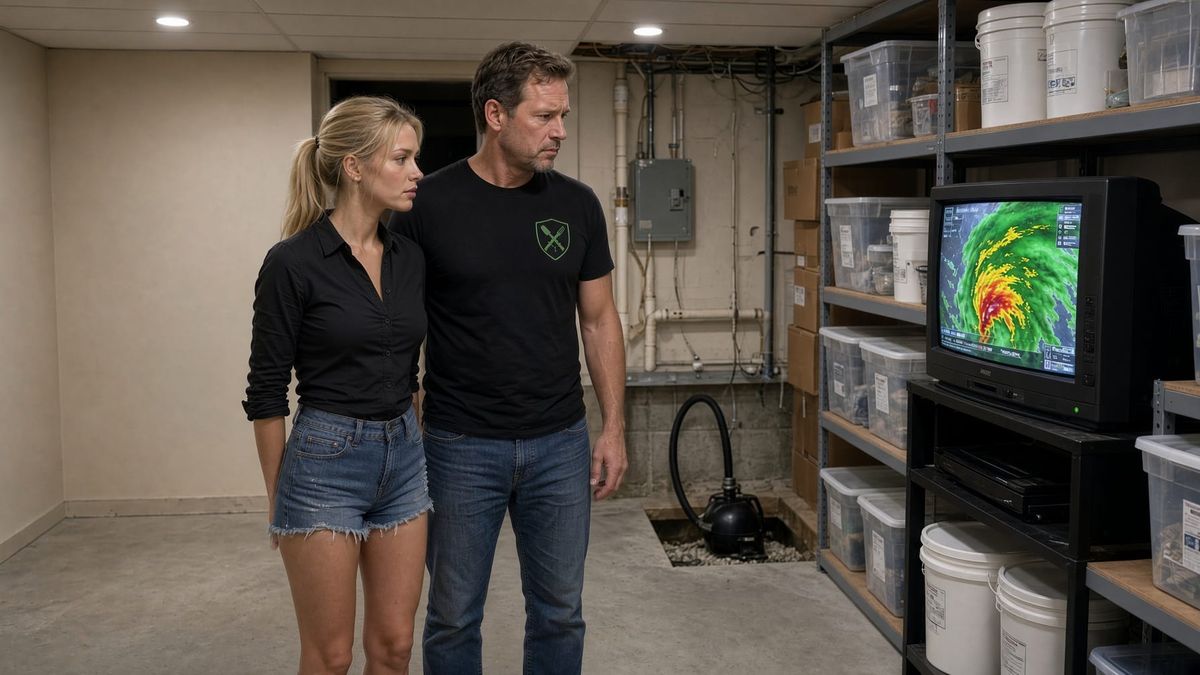
A nor’easter-style rain is lining up for the weekend. You do not need a new theory of preparedness. You need a few things done while the ground is still dry and the lights are still on.
This is the short list.
Stay informed
Sign up for local alerts before the first band of rain, not during it. Your town, county emergency management, and the National Weather Service are enough. Watch the forecast Friday into Saturday and notice when it shifts from “rain” to “flooding.”
Know the roads you actually use. If one of them floods every hard rain, decide now that you will not drive it. A closed road is information. A washed-out road is a decision you already missed.
Stop water before it starts
Water in the basement usually starts outside.
- Walk the gutters. Pull leaves and sticks. A clogged gutter dumps water at the foundation.
- Check the downspouts. They should carry water away from the house, not into the corner of the basement.
- Clear storm drains and low spots at the end of the driveway if they are yours to clear.
- Move anything that turns into a dam: tarps, bins, a pile of brush against the wall.
Ten minutes with a ladder and a rake beats a night with a shop vac.
Protect the basement
Assume a heavy rain can put water on the floor. Around here that is not rare.
- Put important papers up. Passports, insurance, licenses, and anything you would hate to dry on a radiator do not belong in a box on the concrete. A shelf, a high cabinet, or a waterproof pouch is enough.
- Same rule for food. Emergency food on the floor is emergency food you may have to throw out. Shelves, not the ground.
- If you already know the basement floods, have a pump ready, test it, and know where it discharges. A pump still in the box is a decoration.
- Lift what you can: tools, ammunition, batteries, and cardboard. Water ruins more by soaking the bottom six inches than by filling the room.
Plan for the power to go out
Rain like this takes trees and lines with it. Treat an outage as likely, not as a surprise.
- If you have a generator, check fuel now. Propane level, gas can, or whatever you actually run. Start it once before the storm so you know it starts.
- Run it outside, away from windows and doors. Not in the garage. Not in the basement. Carbon monoxide does not care how prepared you felt.
- Charge batteries, phones, and lanterns while the power is up. A flashlight with dead cells is the same as no flashlight.
- Know what the generator actually feeds. Freezer, heat, a few lights, the sump. Do not assume “the whole house” unless you have already proven that.
- If you do not have a generator, you can still cover light, a way to cook that is safe indoors or outside, and a way to hear alerts. That is the minimum.
Stay safe
When it is coming down, the useful move is usually to stay put.
- Do not drive through water on the road. You cannot see the hole under it.
- Stay out of the basement if water is already rising and you do not have a clear way to kill the power. Electricity and standing water are a bad pair.
- Check on the people in your own house first. Then a neighbor if you can do it without putting yourself in the water.
- After it passes, look before you step. Slick floors, loose branches, and a sump that is still running are the ordinary leftovers.
You will not control the storm. You can control the gutters, the shelf height, the fuel, and the decision to stay off a flooded road. Do that part before the rain starts.