Do You Have All the Essentials for When Disaster Strikes?

Most people who take preparedness seriously eventually get around to storing emergency food. That’s a smart move. But food is only one piece of the puzzle. When a real disruption hits — whether it’s a prolonged power outage, a severe storm, civil unrest, or something worse — you may discover that the things you don’t have become just as important as the food you do.
So the real question is: beyond food, do you actually have the other essentials covered?
The Essentials People Often Forget
Here are some of the most commonly overlooked categories:
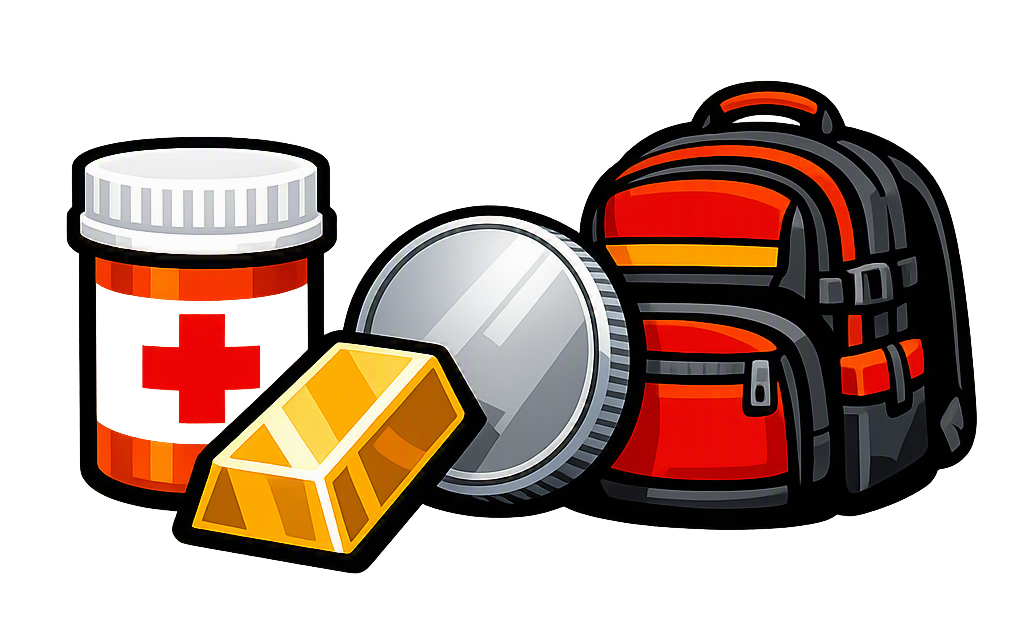
- Cash When electronic payment systems go down, credit cards and phone payment apps suddenly become useless. Having a reasonable amount of small-denomination cash on hand can make a major difference for buying fuel, supplies, or services when digital systems are offline.
- Gold and Silver Precious metals have been used as a store of value for thousands of years. In longer-term disruptions, they can serve as a private, recognizable form of wealth that doesn’t rely on banks or digital networks. Even a modest amount can provide flexibility.
- Barter Items In some situations, the most useful things are everyday items other people need but may not have. Alcohol, ammunition, batteries, lighters, hygiene products, coffee, and over-the-counter medications have all historically been strong barter goods.
- Medicines and First Aid Prescription medications, pain relievers, antibiotics (where legally appropriate), bandages, and basic first aid supplies are easy to overlook until you need them. Many medical issues become much more serious when pharmacies and hospitals are difficult to reach.
- Light, Power, and Communication Flashlights, headlamps, extra batteries, power banks, and a way to receive information (such as a battery or hand-crank radio) are critical. A dark house gets old very quickly.
- Hygiene and Sanitation Toilet paper, soap, toothpaste, trash bags, and feminine hygiene products rank near the top of things people regret not storing once normal supply chains are interrupted.
The Power of a Go Bag
One of the most practical steps you can take is to gather critical items into a single Go Bag (also called a Bug Out Bag). The purpose is simple: if you ever need to leave your home quickly, you should be able to grab one bag and walk out the door with the most important essentials already packed.
A well-built Go Bag typically includes things like:
- A change of clothes and sturdy shoes
- Important documents (or copies)
- Some cash
- Basic medications and first aid
- A flashlight and extra batteries
- Charging cables and a power bank
- A small amount of food and water
- Hygiene items
- A lightweight emergency blanket or poncho
The goal is not to pack everything you own. It is to have the most critical items already gathered in one place so you are not running around the house under stress trying to remember what you need.
It is also wise to keep a smaller emergency safety bag in your car. This version can focus on items useful if you are stranded or unable to return home right away, such as a flashlight, basic first aid, water, a charging cable, a small amount of cash, and a light jacket or emergency blanket. Many people discover the value of this the hard way during an unexpected overnight stay in their vehicle or a long roadside delay.
Best Practices for Storage
Good storage habits dramatically improve the reliability of your essentials.
- Keep items in a cool, dry, and stable environment Heat and moisture damage far more than just food. Medicines can lose potency, batteries can corrode, and cardboard packaging can degrade when conditions are poor.
- Protect against temperature swings Repeated expansion and contraction from heat and cold can damage packaging, seals, and sensitive items like medications or electronics.
- Use clear, consistent labeling When everything is clearly marked with contents and date acquired, you spend less time searching and more time actually using what you have.
- Store by category and priority Keeping similar items together (medical, lighting, barter, etc.) makes it much easier to do quick inventory checks and grab what you need under stress.
- Maintain security without creating inaccessibility Valuable items like cash, precious metals, and ammunition should be protected, but still reachable when you actually need them.
Best Practices for Inspection
Storage alone is not enough. Regular inspection is what keeps your preparations reliable.
- Check expiration dates on medicines and supplies Medications, batteries, and some first aid items lose effectiveness over time. Using or rotating them before they expire is far better than discovering they are no longer good during an emergency.
- Test critical items periodically Have you ever grabbed a flashlight during a power outage only to find the batteries are dead? That small moment of frustration is a perfect reminder that inspection matters. The same principle applies to radios, lanterns, and other equipment.
- Look for signs of damage or deterioration Corrosion on batteries, leaking packages, dried-out medical supplies, or damaged packaging are all signs that something needs to be replaced.
- Keep simple records of what you have and when it was last checked A basic inventory helps you notice gaps, track ages of items, and avoid the “I thought I had more of that” problem.
Putting It All Together
Preparedness works best when it is treated as a system rather than a pile of supplies. Food is important, but so are the supporting items that make life livable when normal systems are disrupted. Cash, precious metals, barter goods, medicines, lighting, hygiene supplies, a ready-to-grab Go Bag, and a basic emergency kit in your car all play a role.
The most effective approach combines thoughtful selection, proper storage, and regular inspection. Over time, this turns a collection of items into a dependable resource.
Solutions like DPO Ready Center can help with this process by giving you a clear way to track your other essentials — including what you have, where it is stored, quantities, expiration information, and when items were last checked. Having that information organized makes it much easier to maintain your preparations and close the gaps before they become problems.
Real preparedness is not just about having things. It is about knowing what you have, knowing where it is, and knowing that it will still work when you need it.