Owning a medical kit is not the same as having a medical capability.

Picture this: something goes wrong, hands are shaking, and the only thing you have is a vague memory of a video you watched months ago. The kit sits there unopened. The item gets used wrong—or not used at all. Good intentions turn into wasted space and false confidence.
A medical capability is created by two things working together: the right supplies in known condition, and the practiced ability to use them under stress. Of the two, the skill side is the one most often neglected.
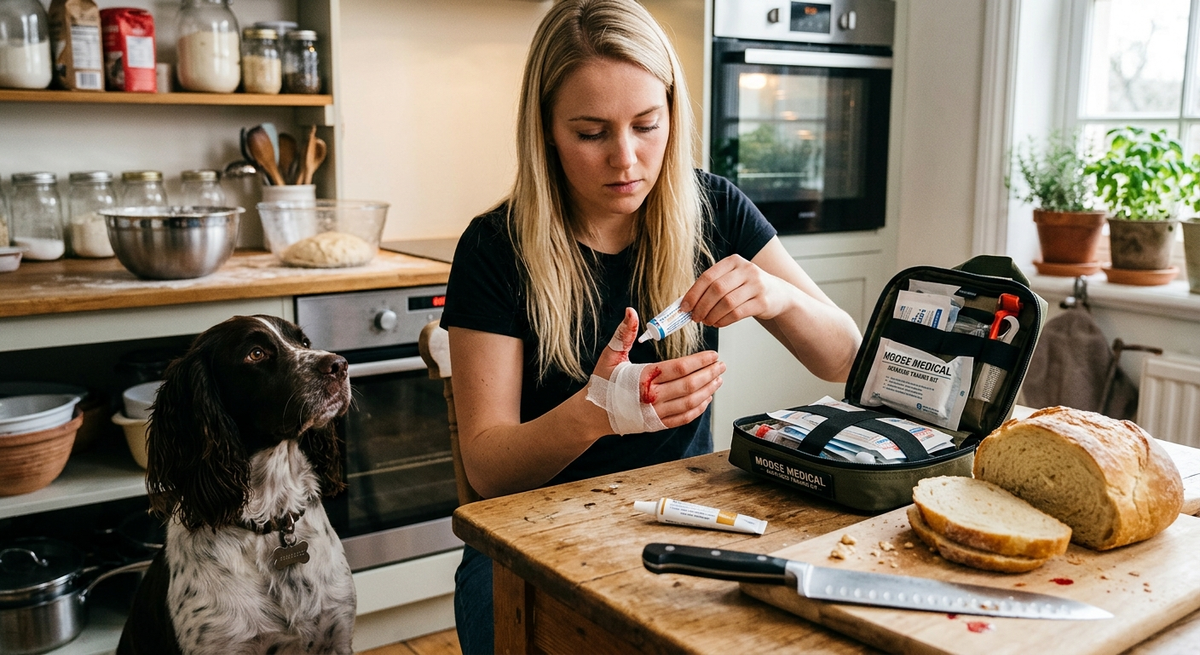
One evening I was home alone baking bread. My Field Springer Spaniel, Montana, jumped for a piece before I finished cutting the loaf. The knife deflected and opened my thumb to the bone.
I stopped the bleeding, grabbed the mountain medical kit from the carriage house, cleaned the wound, applied liquid wound closure, and bandaged it. Urgent care was closed. I cleaned the floor, gave the dogs the bread they clearly thought they deserved, and went in the next morning for stitches.
That night didn’t need an emergency room. It needed a kit I could reach and the training to use it.
That’s the point most people miss. Preparedness isn’t only for grid-down scenarios. It’s for the ordinary evening when something goes wrong in the kitchen, the shop, or the field—when urgent care is closed and the hospital is forty minutes away. Everyday events don’t announce themselves. A hungry dog certainly doesn’t.
This brings us to what I call the Montana rule:
If you can stop the bleeding, clean the wound, close it properly, and the patient is stable and coherent—urgent care in the morning is often the right call.
If you can’t stop the bleeding, can’t assess the depth, or the patient’s condition is getting worse—that’s an emergency room decision, not a morning decision - if in doubt, go to the emergency room.
Supplies without skill are incomplete. Skill without supplies is limited. The combination of current medical stores and the practiced ability to use them is what actually produces a usable capability. Anything less is mostly psychological comfort.
The full treatment—what belongs in the kit, the baseline skills every adult should have, intermediate wound care, inspection and expiration discipline, and how medical readiness fits into the larger system—is in the book.
Understanding Preparedness is free this Friday, September 4, as part of September’s Preparedness Month free book promotion. Grab it while it’s up.
Build both sides. Inspect regularly. Treat the medical kit with the same seriousness you give food, water, and security.