Purpose is not a label. It is the mission.

As a pilot, I do not “go flying.” I fly a mission.
Before the engine starts there is a plan: where I am going, what the airplane will carry, what the weather is doing, and what I will do if a system fails. The checklist is not bureaucracy. It is how you have a safe flight. You load fuel for the route plus reserve. You do not take a day-VFR airplane into icing and hope. You do not leave the charts behind because the GPS usually works. Mission first. Then the gear. Then the “what if.”
Firearms and ammunition are the same work.
You need to know the mission, plan for it, and plan for what may go wrong. You would not drop a .380 in a backpack “in case of bear.” You would not load cheap, underpowered range ammo in the pistol you carry every day and call it ready. A deer load is not a bear load. A duty load is not always what you want in a hallway. Range ammo is not defensive ammo.
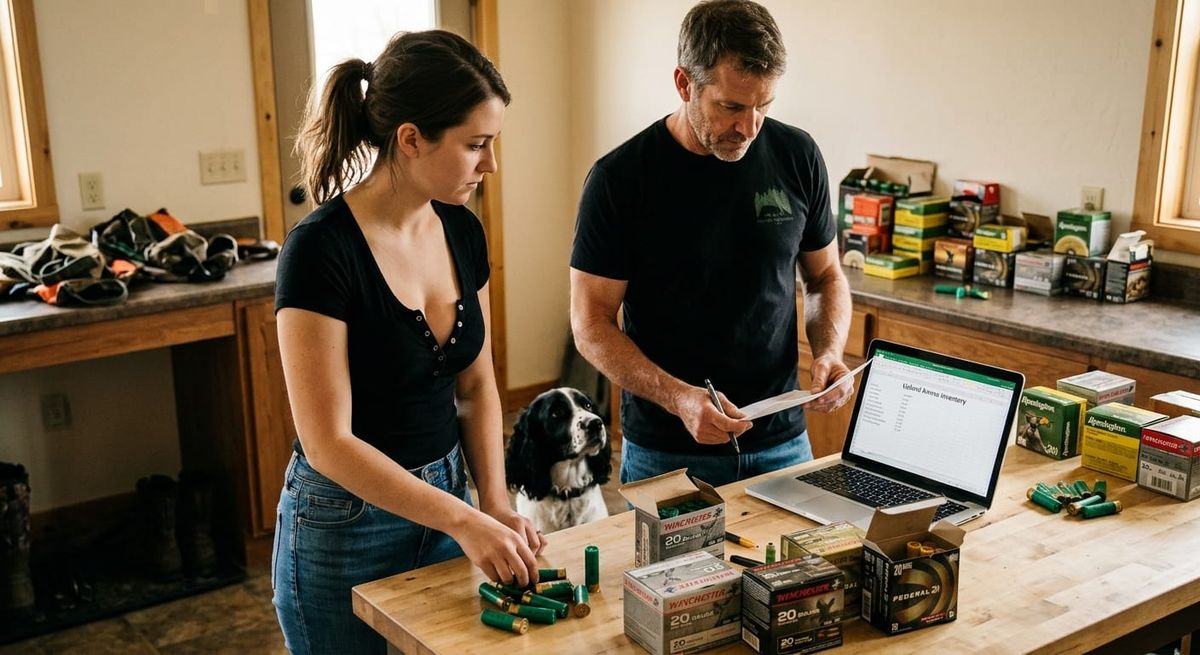
That is why DPO Ready Center now asks you to mark Purpose on each ammunition lot. The field is there so you do not grab the wrong box when it matters.
This is guidance, not a shopping list and not legal advice. Calibers, pressure, and what is lawful change with the gun, the state, and the season. If the manufacturer says do not use +P, do not use +P. If the gun will not feed a hollow point, that hollow point is not a defensive load in that gun, no matter what the box says.
Test what you intend to trust. A gun you never fired is not ready. Neither is a load you never ran.
Range
Job: practice, function checks, cheap volume.
Usually: full metal jacket (FMJ — a bullet with a copper jacket over a lead core that does not expand), wadcutter, or bulk lead for rimfire. For shotguns, cheap birdshot or light target loads.
Match the feel of the serious load when you can: similar weight, similar point of aim. Do not assume a 115-grain range round prints where your 147-grain defensive round prints. Confirm on paper.
Range ammo is for learning. It is a poor choice for home defense (it tends to over-penetrate — keep going through the target and whatever is behind it) and a poor choice for game (it often does not expand).
Defensive (home and lawful carry)
Job: stop a human threat with a round that feeds in your firearm and stays inside a useful window.
Usually: modern jacketed hollow points (JHP — designed to open up, dump energy, and limit over-penetration). Look for loads that have been tested to the FBI-style window: about 12–18 inches in calibrated gelatin, including after clothing. Common 9mm examples people actually carry are in the 124–147 grain class from makers who publish barrier data (Federal HST, Speer Gold Dot, Hornady Critical Duty / Critical Defense, and similar). That is a class, not a brand religion.
Rules that matter more than the box art:
- It must cycle in that gun. Prove it. Fifty rounds is a better test than one magazine.
- Follow the manual. +P (higher pressure) is not “more ready.” It is more stress on the gun. If the book forbids it, it is not a defensive load for that firearm.
- Older or picky guns (some historical pistols, some .32 / .380 / 7.62×25 platforms) may only run ball. Then you have a reliability problem, not a shopping problem. Fix the gun or pick a different gun. Do not pretend.
Defensive ammo is expensive. That is why Purpose exists: so you do not burn the good box on a casual range day unless you meant to.
Duty
Job: a working load for people who may have to shoot through barriers — car glass, wallboard, heavy clothing — and still get consistent penetration.
Duty and defensive overlap, but they are not the same. Duty ammo is often bonded (jacket locked to the core so it does not shed when it hits glass or steel) and sometimes +P in guns built for it. Agencies test for barriers first, bare gelatin second.
If you are not working that problem, you may not want a duty load in the house. Barrier-blind bullets can over-penetrate in a typical home. Mark Duty when that is the actual mission (vehicle, rural property with barriers, professional use). Mark Defensive when the problem is a hallway and a family on the other side of drywall.
If you carry one gun for both, pick one primary Purpose, put the rest in the description, and train with that load.
Hunting — small game
Job: kill cleanly without ruining the meat.
Usually:
- .22 LR, .17 HMR, or similar for squirrel, rabbit, pests (where lawful)
- Shotgun: smaller shot, often #6, #7½, #8
- .410 or 20 gauge for close work, if that is what you shoot well
Hollow-point rimfire is common for small game. Birdshot is not a deer load and not a bear load. Do not “step it up” in a panic. Wrong purpose is how people wound animals and get in legal trouble.
Check state seasons, shot type (lead vs steel over water), and caliber minimums. The tag on the box does not override the warden.
Hunting — upland bird (pheasant, grouse, quail, chukar, woodcock)
Job: a moving bird at shotgun range, enough pellets in the pattern to kill cleanly without ruining the bird.
Usually: 20 gauge is the default upland gun for a reason. It carries well, recoils less than a 12, and with the right shot still does the work on pheasant and grouse. .410 is a specialist or youth/small-bird gun: tight pattern, less shot in the air, less margin if you are late. It will take quail and woodcock in skilled hands. It is a poor pheasant gun for most people and a terrible “just in case” defensive load.
Typical shot (lead where legal): quail and woodcock often #7½ or #8; grouse and chukar #7½ or #6; pheasant #6, sometimes #5. Open or improved-cylinder chokes for close cover; modified when birds are farther out. Pattern the load on paper at the distance you actually shoot.
Steel or other non-toxic shot is required over water and in some upland units. Steel patterns tighter and hits lighter than the same size in lead — often go up one shot size and confirm the barrel is rated for it.
Upland loads are not deer loads, not bear loads, and not home-defense loads. Mark the lot Hunting. Put the bird and the shot in the description: Upland 20 ga #6 — pheasant.
Hunting — deer and similar (whitetail, hog, etc.)
Job: enough penetration and expansion to reach vitals on a larger animal, with a bullet construction the state allows.
Usually: soft point, bonded hunting bullets, or controlled-expansion rifle bullets in a legal deer cartridge (.30-30, .308, .30-06, 6.5 Creedmoor, and many others). For shotguns, a slug (one large projectile), not birdshot. For straight-wall states, whatever that state lists.
FMJ is the wrong tool here in most jurisdictions and the wrong tool ethically. You want a bullet that opens and stays together.
Match the animal and the distance you will actually shoot. A 200-yard deer load is wasted in thick woods if you cannot see 40 yards. Fitness to task, not catalog glory.
Put the species in the description (whitetail, 150 gr SP) so a year from now you are not guessing.
Special case: bear in the wild
This is not “defensive 9mm with a different sticker.” A hollow point that is excellent in a parking lot can stop too soon in heavy muscle and bone. That is the backpack-.380 problem in real life.
Wildlife agencies (including U.S. Fish & Wildlife Service guidance for Alaska) treat bear spray as the first tool that actually works for most people, and a firearm as backup you must be able to run under fear. Spray does not require a perfect shot on a moving animal at ten feet. A wounded bear is a worse problem than a surprised one.
If a firearm is part of the plan:
- 12-gauge hard slug (Brenneke-class, not birdshot, not most buckshot) or a rifle in a serious dangerous-game or heavy hunting caliber is what agencies still describe as appropriate.
- Handguns, if carried at all, want hard-cast, flat-nose, full-power loads (people talk 10mm and .44 Magnum in this role). Not JHP. Not light “range 10mm.”
- FWS is blunt: a .44 Magnum in untrained hands can be inadequate, and an inexperienced shooter with a rifle can make things worse.
Mark these lots Hunting (or Defensive only if that is truly woods defense, not a house gun). Put “bear — hard cast / slug” in the description. Do not mix them in the same can as your 9mm HST.
Know defense-of-life-or-property rules for your state. Alaska is not New Hampshire. Shooting a bear without legal cause is not preparedness. It is a case file.
Drone (read this twice)
In Ukraine, soldiers use 12-gauge semi-autos and dense shot (often #1–#4 / small buck, sometimes tungsten) against FPV drones at close range. That is a war zone, with rules of engagement, and it is not U.S. home law.
In the United States, a drone is an aircraft. The FAA’s public answer is: Can you shoot down drones above your property? No. It is illegal to shoot at an aircraft. 18 U.S.C. § 32 and FAA civil penalties sit on top of state reckless-discharge laws. Hovering over your yard is not a hunting tag. Jammers are also illegal for civilians.
If a drone is a problem: document, call local law enforcement, report unsafe flight to the FAA. Do not invent a new use of force.
So what is Purpose: Drone in the software? It is a classification for people who:
- are stocking or training with pattern-dense shotgun loads in a context where that use is lawful (military, authorized security, or another country whose law allows it), or
- want a separate bucket so those shells are not confused with bird hunting or home defense.
It is not a suggestion that a U.S. civilian should take a shot at an aircraft. Marking a box “Drone” does not make the shot legal.
If you still keep a dense-pattern 12-gauge load for other lawful shotgun work, call it what you will actually use it for. Honesty in the Purpose field is the whole point.
Shotgun choke is part of the mission too
A choke is the constriction at the end of the barrel. It does not add power. It shapes the cloud of shot. Pick it the same way you pick the shell: for the job, then prove it on paper.
People hear “dense load” and “#1–#4 shot” and reach for Full. That is the tightest common tube, not automatically the best pattern. Large pellets deform and bounce in a tight squeeze. The pattern can blow — a hole in the middle, clumps on the edges — so Full gives you a smaller, uglier cloud instead of a better one. That gets worse as you go from #6 toward #4, #2, #1, and buck.
Modified (or Improved Modified) is the honest starting choke for dense #1–#4 loads. It usually holds a useful sheet of pellets at 20–35 yards without turning the pattern into a doughnut.
| Load | First choke to try | Why |
|---|---|---|
| #4–#1 lead birdshot | Modified | Full only if it actually centers on paper |
| Steel #4–#1 | Modified, often as tight as you should go | Many barrels are not rated for Full + steel |
| Tungsten / hard “super shot” | Whatever the barrel and wad maker allow | Hard shot plus Full is a good way to bulge a tube |
| Buck (#4, #1, 00) | Improved Cylinder or Modified | Full is frequently worse, not better |
| Flitecontrol-style wads | Cylinder or Improved Cylinder | Full can wreck the wad those loads need |
Upland is the same logic in milder form: open or improved-cylinder in close cover, modified when birds are farther out. A .410 with a Full tube does not magically become a 20 gauge.
Do not guess. Same gun, same shell, same distance you will actually shoot. Start at 20 and 30 yards. Shoot Modified, then Improved Modified, then Full. Count pellets in a 20- or 30-inch circle and look for a hole in the middle. Keep the choke that puts an even pattern on the target — not the one with the smallest overall spread.
If Full wins on that gun with that load, use Full. Until you see it on paper, Modified is the default. The choke is equipment on the mission, the same as the cartridge. Mark the shell’s Purpose in Ready Center. Write the choke that actually patterned in the description so you are not standing in the field a year from now, twisting tubes by memory.
How to use the field without lying to yourself
- One lot, one primary Purpose.
- Description for the rest (“bear slug,” “whitetail,” “upland 20 ga #6,” “FBI-style 147 JHP”).
- Approved For = the gun that actually ran it.
- Range ammo does not count as a defensive stockpile. The Overall Readiness Report already scores Purpose 1 (Defensive) only. That is on purpose.
- Rotate and inspect. Purpose does not stop corrosion.
You would not take off without knowing the mission, the fuel, and the failure plan. Do not load a firearm that way either. The best ammo for each type is the ammo that matches the mission, is legal where you stand, is within the gun’s rated pressure, and has been fired in that gun until you trust it. Everything else is a label on a box.