A system you will actually use

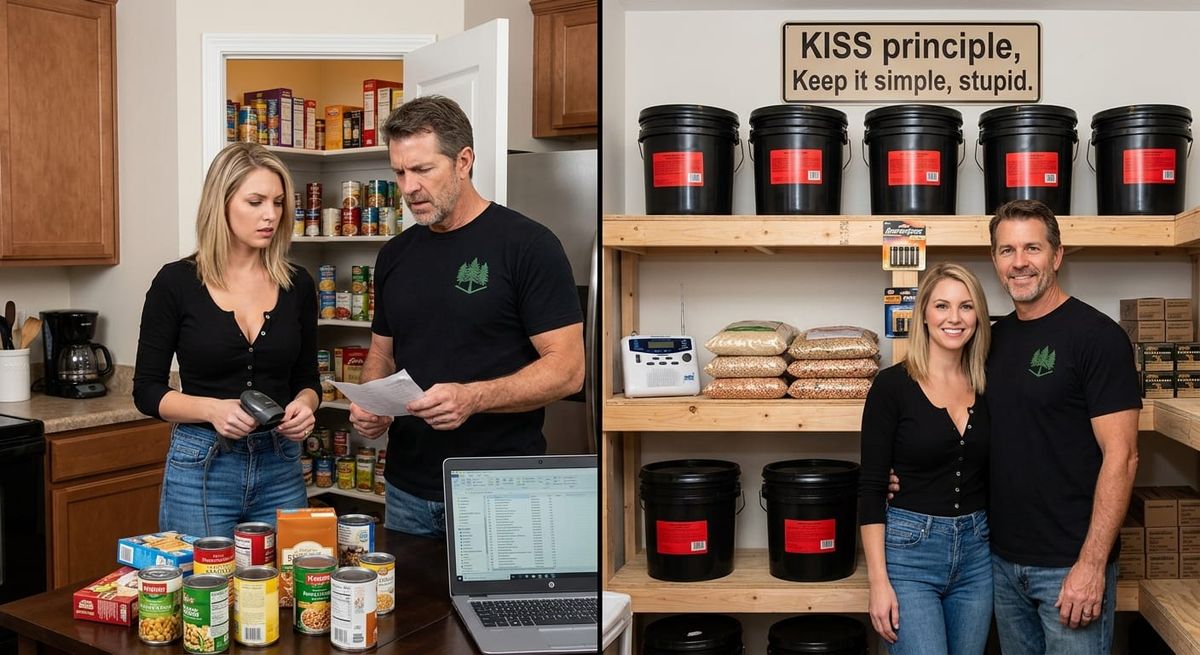
Yesterday I caught myself looking backward — at feature lists, at warehouse tools, at the idea that a serious preparedness system ought to scan every can in the house. That is the wrong frame.
The right question is not “what can the software do?” It is what will you still be doing in three months? A system that is only usable on a Saturday in January, when motivation is high, is not a preparedness system. It is a hobby that expires.
Two different kinds of food
Living in New England, we already know the short storm. Power may go. Roads may ice. You might be in the house for a few days. Before it hits, people run for milk and bread. That food has a short shelf life. Counting it does not matter. You are covering a 72–96 hour gap with what you already buy and eat.
Emergency food is a different class. It is not your normal pantry. It is not the spaghetti you will cook on Tuesday. It is the supply that is supposed to still be there if the trucks stop, the shelves go empty, or the store is closed for a lot longer than a long weekend.
Those are not the same problem. Treating them as one problem is how people burn out.
Why the supermarket-clerk model fails
A barcode scanner is built for shipping, receiving, and daily inventory. A store decrements a can of beans because someone is paid to do it, and because the count is the business.
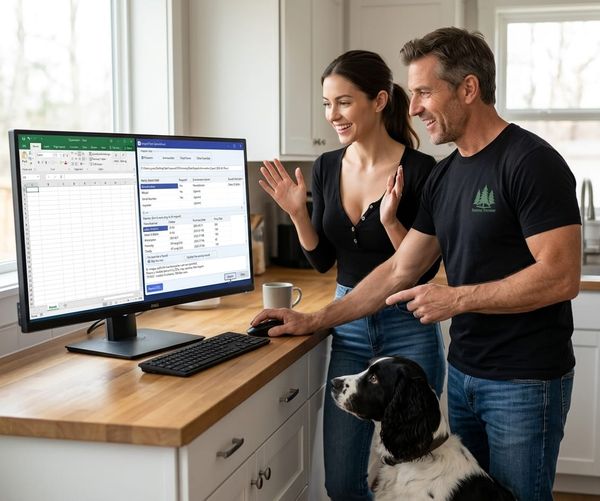
If you eat a can of beans at home and then have to decrement it, then do the same for the pasta, the rice, the sauce — that is not preparedness. That is a part-time job as an inventory clerk. You can do it if you want. Check back in three months. There is a good chance you stopped, because life got busy, and the list is now wrong.
Wrong counts are not a small error. They are a false sense of readiness. You think you have two weeks. You have four days and a spreadsheet you no longer trust. Once you stop trusting the numbers, you stop using the system. Once you stop using the system, you are not prepared. You just have boxes.
Why people quit things that are too much work
This is not a character flaw. It is how people work.
BJ Fogg’s simple model of behavior is: you do a thing when motivation, ability, and a prompt line up. After a scare — a storm, empty shelves, a diesel story on the news — motivation is high. Ability is the hidden killer. If the task is too many steps, too often, too fussy, the behavior dies even if you still “believe in preparedness.”
You have seen the same pattern elsewhere:
- Calorie counting. People log every bite for two weeks. Then a busy day. Then three days. Then the app is a monument to a diet they are no longer on. The tracking did not fail because food math is useless. It failed because daily logging is more work than most lives will carry.
- Reorganizing the cabinets. A perfect pantry on a Sunday feels like control. Maintaining that perfection every time someone grabs a can is chaos you volunteered for.
- Cognitive load. Your working memory — the mental scratchpad — holds only a handful of items at once. Under stress it holds less. A system that requires you to remember to scan, decrement, and file every meal is competing with the rest of your life. The system loses.
Herbert Simon called the sane alternative satisficing: good enough to serve the goal, not perfect. Perfect pantry counts are optimizing for a warehouse. You are not running a warehouse. You are trying to eat if the store is empty in October.
What you are actually preparing for
Past four days, the question changes. What if there is a strike and the grocery store has nothing? What if, like during COVID, the shelves are bare and you cannot count on restock in a week?
That is not a job for scanning last night’s soup. That is assuring you can continue without the supermarket. Powdered milk. Eggs you do not have to refrigerate forever. Flour and yeast, or the knowledge to make bread. A 3–6 month supply of emergency food with a long shelf life, plus the water, fuel, and spices required to turn it into meals you will actually eat.
You catalog:
- Canning you put up
- Emergency buckets and freeze-dried meals
- The spices, oils, and extras that make those meals edible
- Water, treatment, and the other essentials that food depends on
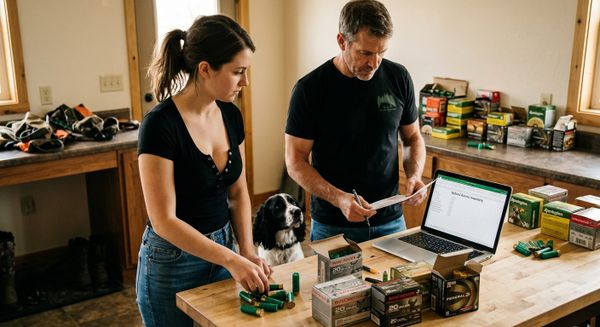
You inspect on a schedule. You rotate. You record location and expiration. You do not pretend you are receiving freight at 6 a.m.
That is sustainable. Sustainable is the only kind of prepared that still exists when you need it.
Keep it boring on purpose
There is no prize for the most complicated inventory. There is a prize for still having food, water, and a list you trust.
Log it. Inspect it. Be ready.
A system you can use is a brochure. A system you will use is preparedness.