When Strangers Appear on Your Property: Practical Safety, Awareness, and Boundaries

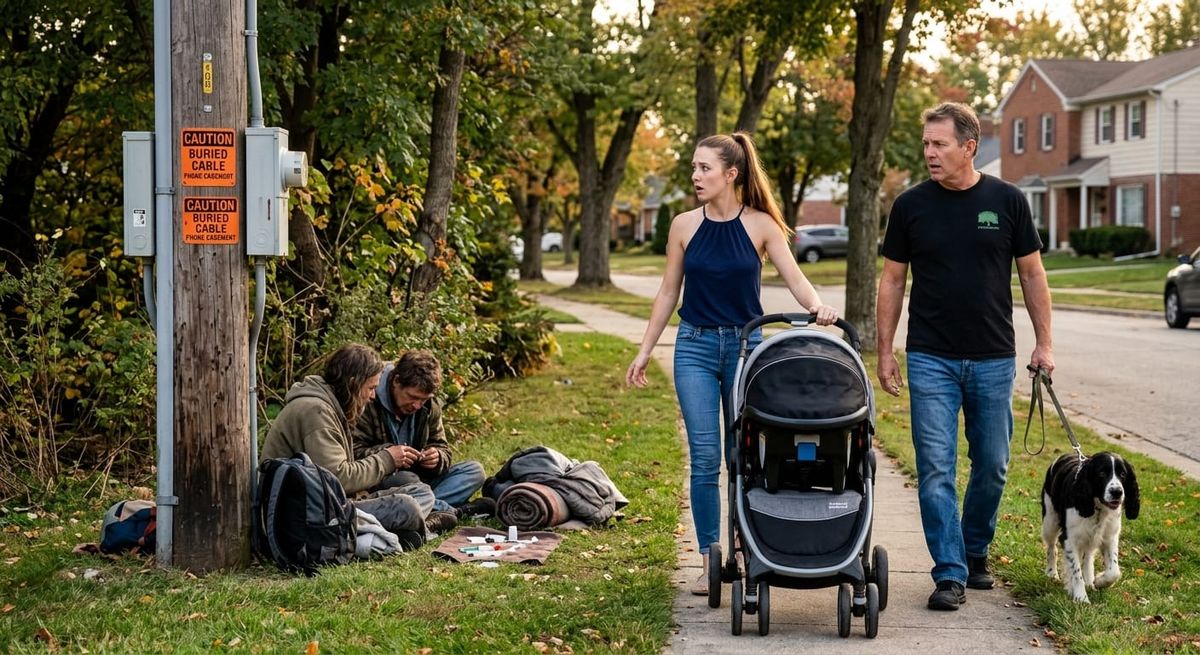
We are hearing about situations like this more and more. Someone steps outside to cut the grass or check the yard and finds two people—clearly intoxicated or high—on or near their property, sometimes by an easement or utility area. In many of these cases there has already been discarded needles or prior police contact about the same spot. The homeowner asks the pair to leave, speaking firmly but without a confrontational tone. One of them becomes aggressive. The homeowner holds position because there is no immediate physical threat. The other person pulls their companion away, and the encounter ends. Cameras go up, the police are called again, and a no-trespassing sign is posted.
These encounters are becoming a regular part of life in more neighborhoods. The goal is not to escalate or play hero. The goal is to protect yourself, your family, and your property while staying on the right side of the law and common sense.
Core principles
1. Situational awareness comes first.
Notice people, vehicles, and activity that do not belong. Pay attention to body language, coordination, and whether someone appears impaired. Awareness is the cheapest and most effective layer of security. It gives you time to choose a response instead of reacting under pressure.
2. Avoid confrontation when you can.
Your safety and the safety of anyone with you outrank “winning” an argument. People under the influence are not predictable. If you can leave, create distance, or simply observe and call the police, that is usually the better option—especially if children or pets are present.
3. Document and report.
Cameras, notes with time/date/description, and prompt calls to non-emergency or emergency lines create a record. Signs that clearly state private property / no trespassing strengthen your position if the same people return. Documentation also helps police respond more effectively over time.
4. Know your boundaries and stay within them.
You have the right to tell people to leave your property. You do not have the right to detain them, chase them into the street in a way that creates new risks, or use force except in lawful self-defense if you are under imminent threat. When in doubt, create distance and let law enforcement handle it.
Day versus night
Daylight usually gives better visibility, more witnesses, and faster police response. You can more easily assess numbers, condition, and whether someone is alone. Still treat impaired or confrontational people as unpredictable.
Night raises the stakes. Visibility drops, response times can lengthen, and you have less information about how many people are present or what they are carrying. Prefer lights, cameras, and distance. Avoid approaching unknown people in the dark if you can simply observe from safety and call for help. If you must move through an area at night, stay alert, keep hands free, and have a phone ready.
What to do if you encounter this while walking a dog or with children
This is the highest-priority scenario because your attention is divided and the people you are responsible for cannot fully protect themselves.
- Create distance immediately. Cross the street, turn around, or step onto a more open or well-lit area. Do not continue walking directly toward the unknown group.
- Position yourself between the unknown people and the children. Keep the dog on a short leash so it cannot pull you closer or escalate.
- Stay calm and use a clear, firm voice if you must speak. Short statements only: “This is private property. You need to leave.” Avoid lectures, insults, or prolonged conversation.
- Do not engage in a debate or try to “handle it.” Your job is to remove your family from the situation, not to reform or confront impaired strangers.
- Call the police as soon as you have space and safety. Give location, description, and direction of travel if they leave. Note any needles, discarded items, or vehicles.
- If the person advances or becomes aggressive, prioritize escape over standing your ground when children are present. Move to a populated area, a neighbor’s house, or back to your vehicle/home. Only use physical defense if there is no other option and you or the children face imminent harm.
Walking a dog or being with kids is not the time to test boundaries or demonstrate resolve. Distance and authorities are the primary tools.
What not to do
- Do not approach alone at night or in isolated areas just to confront.
- Do not put yourself between impaired people and an exit if you can avoid it.
- Do not chase people off the property in a way that leads to a fight on the street or sidewalk.
- Do not assume someone who appears high or drunk is harmless; impairment can increase unpredictability.
- Do not rely solely on verbal commands if the person is not complying and you have a safe path to leave and call for help.
- Do not post detailed real-time locations or personal information on social media that could draw more attention to the exact spot.
Practical property steps that help
- Clear, visible “Private Property – No Trespassing” signs.
- Cameras covering vulnerable corners, easements, and approach paths (with proper notification where required).
- Good exterior lighting.
- Prompt reporting of needles, discarded paraphernalia, or repeated loitering so there is an official record.
- Knowing your local non-emergency number and what information officers find most useful.
Final thought
Standing your ground on your own property when you are alone and daylight is present is different from doing so while responsible for children or walking a dog. The principle is the same: protect life and safety first, document second, and let law enforcement handle enforcement. Preparedness in these situations is mostly awareness, boundaries, communication with authorities, and the discipline to choose distance over escalation when the risk is not purely yours to carry.
Stay alert, keep your options open, and treat every encounter as a chance to practice good judgment rather than prove a point.