How to Keep Rodents and Other Vermin Out of Your Emergency Food

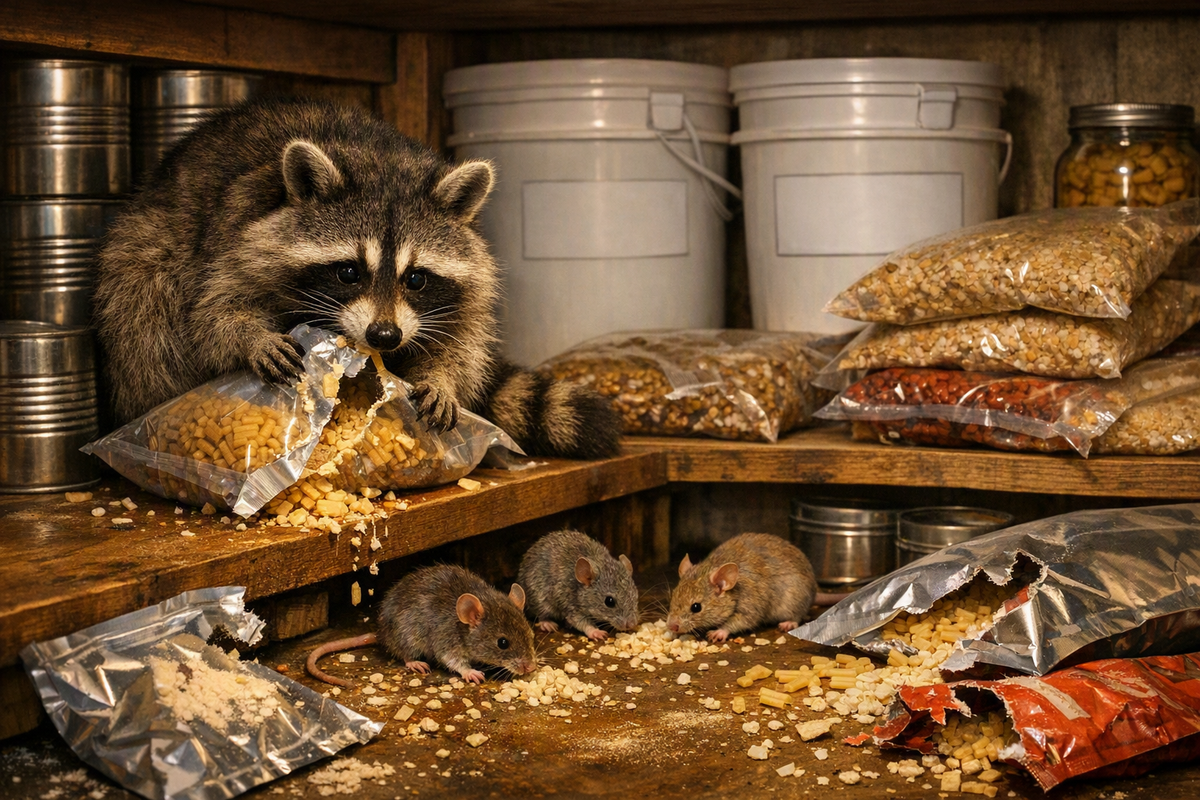
Few things are more frustrating than discovering that mice, rats, or insects have found their way into your emergency food supply. What was supposed to be a reliable backup can quickly turn into a contaminated mess if pests get in.
The good news is that most infestations are preventable with the right habits. The better news is that even strong prevention is not a substitute for regular inspection.
Why Rodents and Vermin Are a Real Problem
Rodents and insects are persistent. They can chew through cardboard, thin plastic, and even some softer packaging materials. Once they get in, they contaminate far more than they eat through droppings, urine, and nesting material. In a real emergency, losing part of your food supply to pests is a problem you do not want to discover late.
Best Practices for Keeping Pests Out
Here are the most effective steps you can take:
- Use hard-sided, sealed containers whenever possible Cardboard boxes and thin plastic bags are easy targets. Heavy-duty plastic buckets with proper lids, sealed ammo cans, metal containers, and quality food-grade storage bins make it much harder for rodents to get in. Hard containers also help protect against crushing and moisture.
- Avoid leaving food in original shipping boxes long-term Factory cardboard is convenient, but it is not a strong barrier against mice or insects. Transferring food into more secure containers is one of the highest-value steps you can take.
- Keep storage areas clean and free of crumbs or loose packaging Even small amounts of spilled food or torn packaging can attract pests. A clean storage area is far less interesting to rodents and insects than one with easy smells and scraps.
- Elevate food off the floor Storing buckets and containers on shelves or pallets improves airflow and makes it harder for pests to casually explore. It also helps you spot droppings, nesting material, or chewed packaging sooner.
- Seal gaps and entry points in the storage area Mice can fit through surprisingly small openings. Inspect walls, baseboards, doors, and utility penetrations. Steel wool, caulk, and proper door sweeps can close off many common entry points.
- Reduce nesting opportunities nearby Clutter, stacked cardboard, old fabric, and undisturbed corners give rodents places to hide and nest. Keeping the area around your food storage relatively open and orderly makes it less attractive.
- Use traps or monitoring devices as an early warning system Even in a clean area, a few well-placed traps can alert you to activity before a serious infestation develops. The goal is detection, not just reaction.
- Be careful with pet food and bird seed These are common attractants. If they are stored near your emergency food, they can draw pests into the same area.
Prevention Helps — Inspection Still Matters
Here is the part many people skip: even if you do everything right, you should still inspect your emergency food regularly.
No storage system is perfect forever. Lids get left slightly loose. Containers get damaged. A new gap appears in a wall. Seasons change and pest pressure increases. The only reliable way to know your food is still in good condition is to look at it on a schedule.
Set reminders or alerts to inspect your emergency food stores several times a year.
Emergency Food Inspection Checklist
Use this simple checklist when you inspect your stores:
- Look for chewed packaging, corners, or lids
- Check for droppings, nesting material, or shredded paper/plastic
- Smell for unusual or strong odors
- Inspect seals and lids to confirm they are still tight
- Look for signs of moisture, staining, or mold
- Check for insect activity or webbing
- Verify that containers are still elevated and orderly
- Note any damaged or compromised containers for rotation or replacement
- Confirm the area is still clean and free of crumbs or loose packaging
- Record the date of inspection
Catching a problem early usually means losing one container instead of a much larger portion of your supply.
A Simple Habit That Pays Off
Good pest control for emergency food is not complicated. Use strong containers, keep the area clean, block entry points, and then verify with regular inspections. That combination protects both the food you have stored and the confidence you place in it.
Preparedness works best when it is maintained, not just stacked and forgotten.