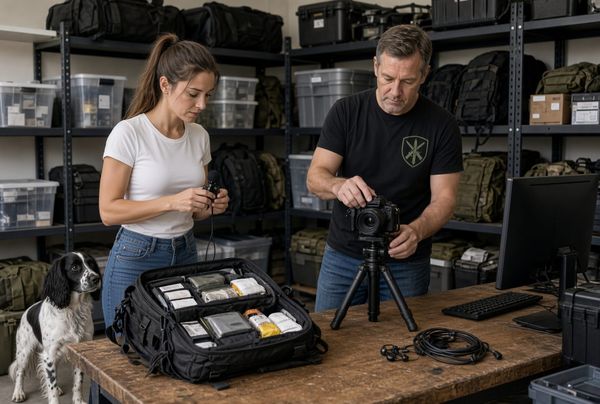
The food stores stayed in camp. Chapter 18 is how you eat.

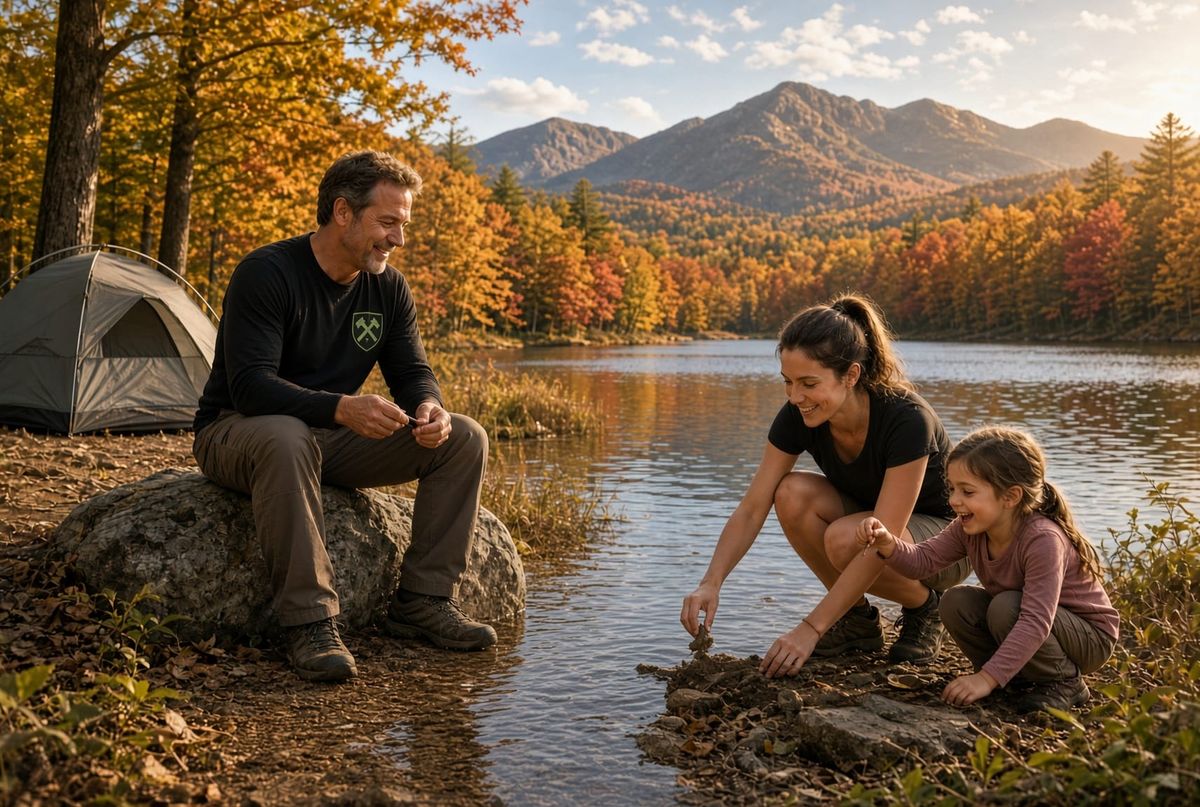
This is the third post in the AFR 64-4 series. Chapter 16 was fire. Chapter 17 was the small pack — what is still on you when the main stores are gone. Chapter 18 is food. It opens Part Six, Sustenance.
When I was young, my family was very poor. I learned early that I was the supply line. If we did not catch fish, we did not eat. At the time it was only a hardship. I did not see that it was training. Fishing. Clamming on Nantasket Beach. The skill was the same either way: if I did the work, we ate. The extra could be sold to pay bills and get other essentials. That is a powerful thing to know. You can take care of yourself.
I hope you have never gone hungry. I hope you have never gone a day, or three, with nothing to eat. This chapter matters because that knowledge is the point of sustenance. The manual can introduce the skills. It cannot give them to you. You get them by doing them.
This post is that introduction. The challenge is the practice.
Section 18-1 says the quiet part. Except for the water you drink and the air you breathe, you meet your needs with food. A bad diet costs stamina, reaction time, and clear thinking. Those are not comfort items.
That is why the handline goes in the small pack from the last post. Not because it looks ready. Because the pantry can be in camp, in the truck, or a day behind you, and you still have to eat.
What Chapter 18 actually says
18-2 — Calories, then fat
The manual puts a number on the day. Warm weather, about 3,000 to 5,000 calories. Cold weather, 4,000 to 6,000. A cold night spends them whether you are moving or sitting in a bag.
Figure 18-1 is the chart. Food, calories, fat in grams. These are the lines that matter here. The rest of the figure is in the manual. Breadfruit will not help you on a brook in the Whites.
- Rainbow trout, 4 oz — 200 calories, 11.8 g fat
- Wild duck, 4 oz — 230 calories, 16 g fat
- Bass, 3 to 4 oz — 109 calories, 3.6 g fat
- Wild rabbit, 4 oz — 124 calories, 4 g fat
- Venison, 4 oz — 128 calories, 3.1 g fat
- Crayfish, 3 to 4 oz — 75 calories, 0.6 g fat
- Dandelion greens, one cup cooked — 70 calories, 1.4 g fat
- Whole large duck egg — 177 calories, 12 g fat
Four ounces of trout is a meal. It is not a day. Rabbit and venison look like meat and eat like lean meat. Duck and trout carry the fat. The manual says it takes a lot of greens to hit the daily number. Pack food you trust. Anything you take is an addition. Do not plan the first 72 hours on a fish you have not caught.
Fishing — the line is the pack tool, the net is not
The chapter lists hook and line, gill nets, traps, and spearing. It says a net is the most effective method because it works while you do something else.
A handline is what fits the separation kit. Fifty feet of line, a few hooks, split shot, something to wind it on. Bait is under the next stone or the next log. You do not need a cast. You need the worm in the seam, and the patience to leave it.
A gill net stays with the camp layer. Figures 18-21, 18-22, and 18-23 show how to make one and how to set it at a slight angle to the current. Stones for anchors. Wood for floats. Check it twice a day. It tangles. In most places it is not a legal way to practice. Read the figures before you need them. A survival manual and a fishing regulation are not the same document.
Snares — look at the drawings
Figure 18-6, Apache foot snare. Figure 18-8, locking loop. Figure 18-14, twitch-up. Figure 18-17, small-game snare. Chapter 17 already told you why the knife stays sharp. Whittling is how you make the trigger you did not pack.
Set fewer than you can check. Check them. Learn the figures on legal ground, or do not learn them at all.
Why the handline
Chapter 18’s first food tool that belongs in the small pack is not the rifle. It is the line.
It weighs almost nothing. It does not need a season to practice the motion, only legal water to practice the catch. It uses bait that is already on the bank. And it fails in a way you can feel: an hour with nothing on the hook teaches you faster than another page of the chart.
Cook what you catch. Boil freshwater fish. Use the fire from Chapter 16. No canister.
Why the Henry Survival AR-7 is the food gun in this pack
The last post put the Henry in the small pack because it breaks down, stores in its own stock, and feeds .22 LR. This chapter is the food job for that choice.
Small game. Squirrel, rabbit, grouse where it is legal. It is not a deer rifle. The venison line in Figure 18-1 does not change that.
The Beretta next to it is the same cartridge, not a second food plan. One ammunition family. That was the kit rule. It still is.
Fifty rounds is a lot of noise and very little food if you miss. Paper first. The rounds in the pack are the ones you do not waste. Dry it and oil it the way 17-3 said. A rifle that will not fire is not 124 calories of rabbit.
Why the Mora is still in the loop
Same knife as the fire post. Feather sticks, then the fish, then the snare toggles. Wipe it. Oil it.
Where it sits
Same three layers as 17-2.
- On the body: Mora, ferro rod and striker, a way to treat water.
- In the small pack: handline, Henry Survival AR-7, Beretta .22, shared can, enough .22 LR, a little food you already counted.
- In camp: the heavy food, and a gill net only if you are staying put and the law allows the practice.
If the small pack is trying to be the pantry, it is too heavy to grab. Chapter 18 does not cancel that.
Clear water wastes the meal
On climbs there is always one person who sees a clear stream and drinks it. A day or two later they are sick. The trip gets harder for everyone else.
Clear is not safe. Brooks, beaver ponds, and lakes in the Whites can carry giardia and still look perfect. Know the source before you leave: which brook, which pond, whether the camp well works without power. Then treat it. Boil it on the fire you already know how to build, or filter it with a filter you have used at home.
Chapter 19 is the water chapter. This post only needs the rule. Food you cannot keep down is not food.
Practice that matches the mission
Same standard as the kit post. Do not only read Chapter 18.
On the next outing where you leave camp:
- Leave the main food in camp. Take the small pack only.
- Fish with the handline. Legal water. Worm from under a log. No rod.
- Build the fire the Chapter 16 way. Cook what you catch, or boil the water you will drink. No canister.
- Treat that water. Every person. Even if you can see the bottom.
- If you take one fish, write down the calories from Figure 18-1. Look at the number before you call it a day of food.
- If you run the Henry, legal season only, and a target you can hit.
If you keep walking back to the cooler, the pack is not feeding you yet.
Read the source. Put it in the Ready Center.
AFR 64-4 Vol I, Part Six — Sustenance, Chapter 18 — Food. Figure 18-1 is the calorie chart. Figures 18-6, 18-8, 18-14, and 18-17 are the snares. Figures 18-21 through 18-23 are the gill net.
https://archive.org/details/USAirForceSurvivalSchoolAFRegulation644.11985
https://archive.org/details/Afr64-4352-481Survivalmanual
Ask for the community: file Chapter 18 next to Chapter 16 and Chapter 17 in the Ready Center library. Add a one-page local card — handline contents, the waters you actually use, how you treat them, and what is legal here. On the next camp trip, fish once with the handline and treat the stream on purpose. A calorie chart with no local water note does not belong in the folder.
A pantry you cannot reach is not dinner. A trout is a meal. Treated water is how you get to keep it.