What’s the One Supply You Thought You Had Covered?

Most people who prepare don’t fail because they bought nothing.
They fail because they assumed.
Assumed the buckets were still in date.
Assumed the flashlight batteries were good.
Assumed the ammo can matched the last mental count.
Assumed the meds in the bin hadn’t quietly expired.
Then one quiet Saturday—or one bad week—they check. And the gap shows up.
Honest question:
What’s the one supply you thought you had covered—until you actually checked?
Where the surprises usually hide
Food dates
A sealed bucket feels “done.” Rotation only works if someone is actually rotating. Open it. Read the date. Note what you find.
Batteries & light
Power fails, flashlight is exactly where you left it—and dead. Same story with radios, headlamps, and the glove-box spare.
Medications & OTC
Fever reducers, allergy meds, anything you were “sure” was current. Shelf life is a date, not a feeling.
Ammo counts
Cans feel like plenty until you total by caliber—or remember the range trip that never got written down.
Memory is not inventory.
Mini checklist (this weekend)
Use one category, or run the whole list if you have an hour:
- Food: Open one container. Confirm label date. Still fits your rotation plan?
- Water / filters: Quantity and condition checked (not only “we have some”).
- Light: Flashlight + one spare set of batteries—tested, not assumed.
- Meds / OTC: One bin. Anything expired or empty?
- Ammo: One caliber counted and written down.
- Go-bag / car kit: Zip open once. Batteries, charger, basic first aid still there?
- Write it down (Record it): Even “still good” counts. That’s how the next check gets easier.
Inspection beats intention.
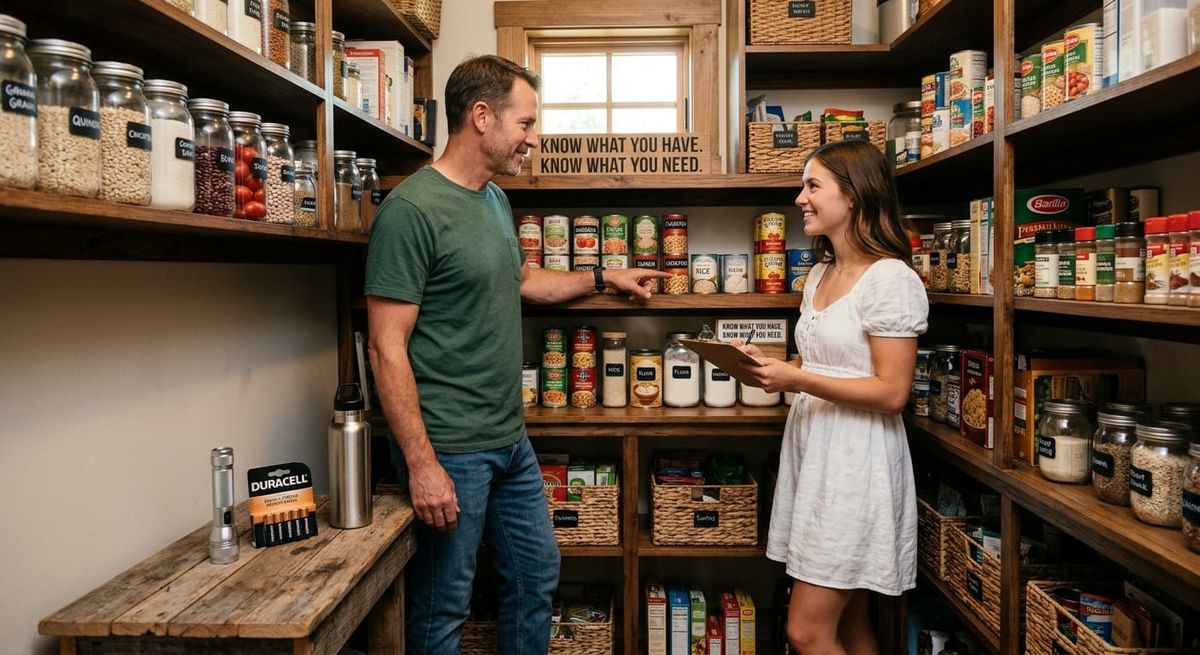
Know What You Have. Know What You Need.
That’s the whole game: a clear picture of what’s on hand, what’s short, and what expires before you need it—not a perfect setup on day one.
For deeper practical topics—storage, rotation, inspections, firearms and ammo habits, and the boring checks that prevent bad surprises—the Being Prepared community is building that out in plain language:
https://being-prepared.ghost.io/
If you also want inventory in one private, offline place (firearms, ammunition, emergency food, and other critical supplies), tools like DPO Ready Center are built around that idea. Your data stays on your machine or a drive you control.
Learn more: https://www.dataprotectionops.com/