You can hit the target and still be shooting poorly

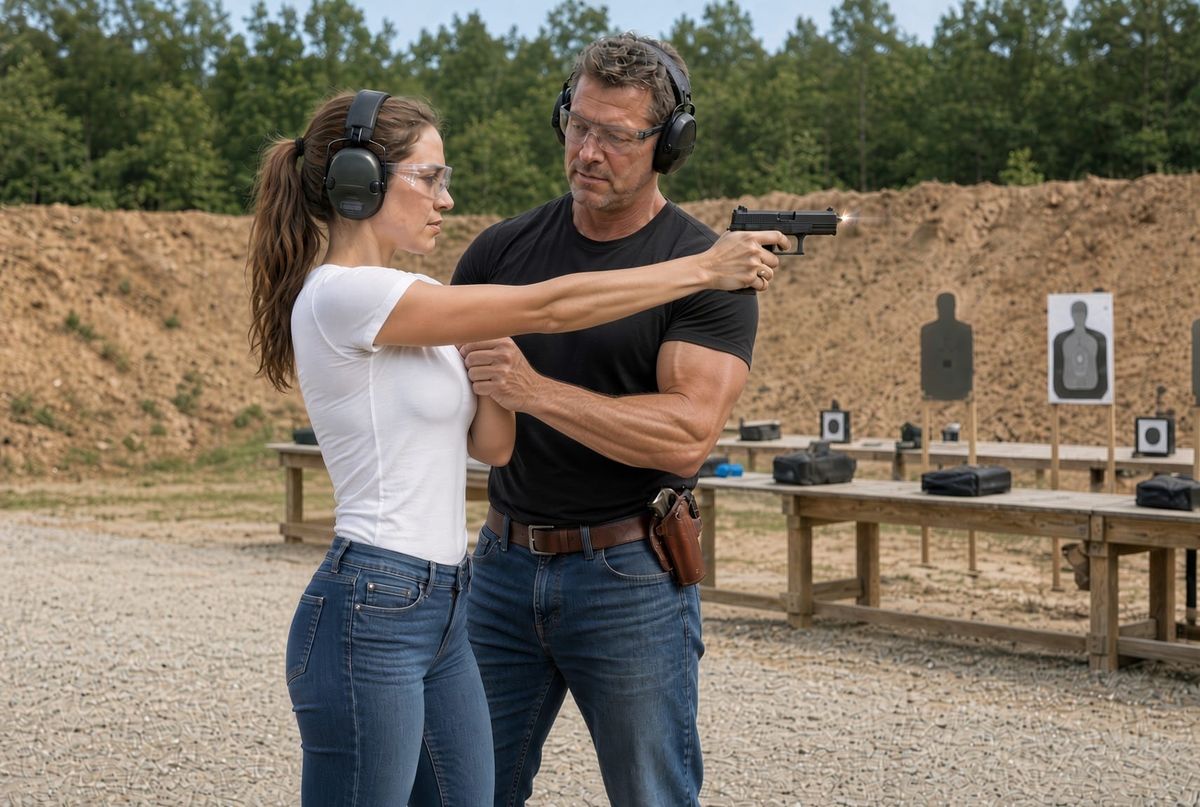
Last weekend at an outdoor range, part of the orientation was a simple safe-handling check: a few shots at a target about 15 feet out. Easy. I put every round on paper.
The useful part was not the score. The Range Safety Officer stood next to me and watched the shot, not just the result. He called out stance, foot placement, and what my non-firing hand was doing when I switched to one-handed. I made small changes. I worked my breathing. Each round got better, and I started to understand why the last one had landed where it did.
That is the part most of us miss. Hitting the target only tells you the bullet arrived. It does not tell you whether your grip collapsed, your support elbow floated, your weight shifted, or you broke the shot while still settling. Those things are hard to see from behind the gun. You are inside the mechanics. Someone standing off your shoulder is outside them.
Shooting is not just the gun and the sights. It is stance, grip, trigger press, breathing, and how those pieces hold together under a simple drill. Dry practice and live drills build the pattern. A second set of eyes tells you whether the pattern you think you are running is the one you are actually running.
A few things worth doing on purpose:
- Treat a short, close drill as a mechanics check, not a score. Five to ten rounds, one change at a time.
- Ask someone competent to watch one thing only: feet, support arm, or trigger finger. Too many notes at once and you chase everything.
- After each adjustment, call your own shot before you look. Then compare what you felt with what they saw and where it printed.
- One-handed work shows problems two-handed shooting hides. If the support side is doing nothing useful, it will show up fast.
- Write down the one cue that actually moved the group. Next session, start there.
You can be safe, accurate enough, and still leave good mechanics on the table because nobody is watching the parts you cannot see. The RSO was not coaching a match. He was watching form on a basic check, and the placement still tightened. That is available at almost any range if you ask for it, and it is available with a trusted shooter beside you on the line.
Good mechanics are built. They are not assumed because the target has holes in it.